Make Tire Safety a Part of Your Auto Checklist


Introduction to Tire Safety Importance
 When it comes to maintaining your vehicle’s health, tire safety often takes a backseat to more apparent issues like engine performance or oil changes. However, ensuring your tires are safe and in good condition is one of the most crucial aspects of vehicle maintenance. Think of your tires as the foundation of your car; they are the only parts that come in direct contact with the road, influencing everything from handling to fuel efficiency. Therefore, understanding and prioritizing tire safety is not just a smart move, it’s essential.
Neglecting tire maintenance can lead to a myriad of problems, including decreased traction, reduced fuel economy, and increased chances of blowouts, which can result in accidents. The core of tire safety lies in regular checks and maintenance, such as monitoring tire pressure, assessing tread depth, and looking out for signs of wear and tear. These small actions can dramatically extend the life of your tires and ensure a safer driving experience.
By making tire safety a staple in your auto checklist, you not only protect yourself and your passengers but also contribute to a more sustainable driving practice. After all, well-maintained tires lead to better fuel efficiency, reducing your vehicle’s environmental footprint. So, the next time you conduct a routine vehicle check, give your tires the attention they deserve. Ready to enhance your driving safety? Explore our detailed tire maintenance guide for more tips and tricks.
Understanding Tire Pressure and Its Impact on Car Safety
Tire pressure plays a pivotal role in ensuring both the safety and performance of your vehicle. Proper tire maintenance is not just about avoiding flat tires; it’s an integral part of a comprehensive auto safety checklist. Under-inflated tires can lead to a host of issues, including reduced fuel efficiency, increased tire wear, and a higher risk of blowouts. Conversely, over-inflated tires can compromise traction, leading to reduced handling and control of your vehicle.
The Importance of Proper Tire Pressure
Maintaining the correct tire pressure is essential for optimal vehicle safety and performance. Properly inflated tires ensure that your car maintains good contact with the road, providing better grip and stability. This is particularly crucial in adverse weather conditions, where optimal traction can mean the difference between a smooth ride and an accident. Additionally, correct tire pressure enhances fuel efficiency by reducing rolling resistance, which can also lead to significant cost savings over time.
How to Check and Maintain Tire Pressure
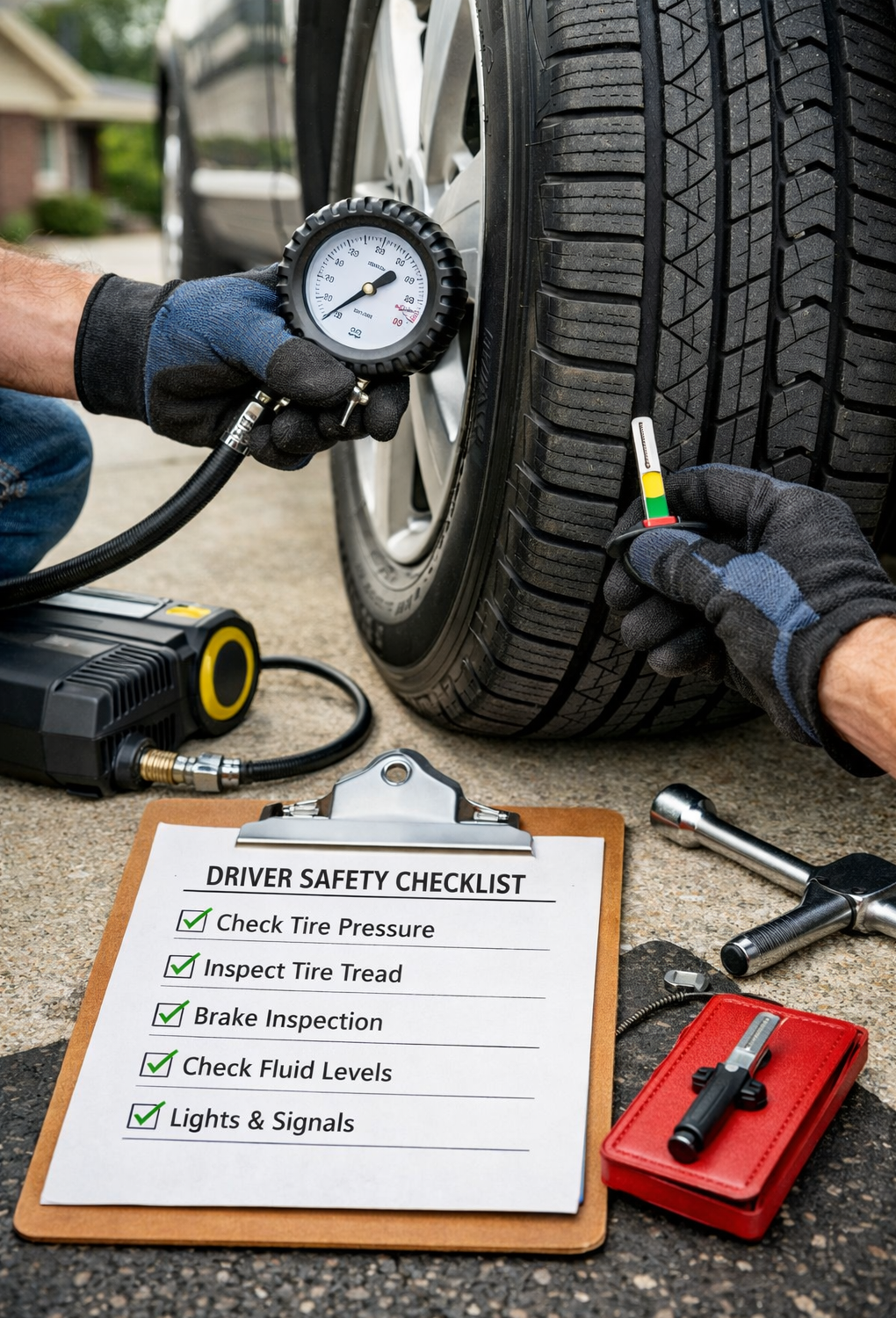
- Regular Checks: Invest in a reliable tire pressure gauge and check your tire pressure at least once a month, or before long trips.
- Know Your Numbers: Refer to your vehicle’s manual or the sticker inside the driver’s door for the recommended tire pressure.
- Adjust Accordingly: Use an air compressor to inflate tires that are below the recommended pressure, or release air if they are over-inflated.
Keeping tire pressure at the manufacturer’s recommended levels not only optimizes safety but also prolongs the lifespan of your tires, ensuring a smoother, more efficient driving experience. Make tire pressure checks a habitual part of your auto maintenance routine to protect yourself, your passengers, and your vehicle.
Want to learn more about car safety? Explore our full range of auto maintenance tips here.
How to Check and Maintain Your Tire Pressure Regularly
Regular tire pressure maintenance is an essential component of vehicle safety, and it plays a crucial role in prolonging the life of your tires, improving fuel efficiency, and ensuring a smooth ride. However, many drivers overlook this simple yet vital task. By incorporating tire pressure checks into your routine auto maintenance checklist, you can avoid potential hazards and costly repairs.
Understanding Tire Pressure
Proper tire pressure is vital for optimal tire performance and safety. Each vehicle has a recommended PSI (pounds per square inch) level, which can typically be found in the vehicle’s manual or on a sticker located on the driver’s side door jamb. It’s essential to adhere to these guidelines to ensure your tires are neither overinflated nor underinflated.
Steps to Check Tire Pressure
- Gather a Tire Pressure Gauge: Use a reliable gauge, either manual or digital, to get an accurate reading.
- Check Tires When Cold: Measure tire pressure when the tires are cold, ideally before the vehicle has been driven for the day.
- Remove the Valve Cap: Unscrew the valve cap from the tire stem.
- Place the Gauge: Press the gauge firmly onto the valve stem to get a reading.
- Compare and Adjust: Compare the reading with the recommended PSI and add or release air as needed.
- Replace Valve Cap: Once adjusted, replace the valve cap securely.
Why Regular Checks Matter
Maintaining the correct tire pressure has several benefits:
- Improved fuel efficiency by reducing rolling resistance.
- Enhanced safety by ensuring better traction and handling.
- Extended tire lifespan by preventing uneven wear.
By making tire pressure checks a habit, you’ll not only safeguard your vehicle but also contribute to a safer driving experience. Want to learn more about vehicle maintenance?
Exploring the Significance of Tire Tread for Vehicle Safety
When it comes to vehicle safety, tire tread might not be the first thing that comes to mind, yet its importance cannot be overstated. The tread on your tires is like the footwear for your car, providing the necessary grip and traction to navigate various road conditions safely. Without adequate tread, your vehicle’s performance and safety are significantly compromised, particularly in adverse weather conditions.
Why is tire tread so crucial? Firstly, it aids in channeling water away from the tire’s surface, which reduces the risk of hydroplaning on wet roads. Hydroplaning occurs when a layer of water builds between the tires and the road surface, causing a loss of traction that can lead to accidents. A well-treaded tire maintains contact with the road, ensuring better control and steering.
Additionally, tire tread affects braking efficiency. Tires with worn-out tread require a longer distance to come to a complete stop, which can be dangerous, especially in emergency situations. This can be particularly perilous during the winter months when roads are icy or snow-covered, further emphasizing the need for proper tread.
Maintaining adequate tire tread is not just about safety; it also extends the life of your tires, saving you money in the long run. Regularly checking your tire tread depth—using a simple penny test or a tread depth gauge—should be a routine part of your vehicle maintenance checklist. By doing so, you ensure that your vehicle remains safe and efficient, ultimately providing peace of mind every time you hit the road.
Simple Steps to Measure and Monitor Tire Tread Depth
Ensuring your vehicle’s tires are in optimal condition is paramount for safety and performance on the road. One of the simplest yet often overlooked aspects of tire maintenance is monitoring the tire tread depth. Proper tread depth is crucial, as it impacts your vehicle’s traction, especially in wet conditions. Fortunately, measuring and monitoring tire tread depth is straightforward and can be done with tools you likely already have at home.
Why Tread Depth Matters
The tread on your tires is designed to grip the road, channel water away, and prevent hydroplaning. Worn-out tread can lead to decreased traction, longer stopping distances, and an increased risk of accidents. Regularly checking your tread depth ensures that your tires are safe and performing at their best.
Measuring Tread Depth
- Use a Tread Depth Gauge: This tool, available at most auto parts stores, provides an accurate reading of your tread depth. Simply insert it into the grooves of your tire to get a reading.
- The Penny Test: If you don’t have a tread depth gauge, a simple penny can do the trick. Insert the penny into the tire’s tread groove with Lincoln’s head upside down. If you can see the top of Lincoln’s head, it’s time to replace your tires.
Regular Monitoring
Make it a habit to check your tire tread depth every month. This can be incorporated into your regular vehicle maintenance routine, such as during oil changes or before a long road trip. Consistency is key to ensuring tire safety.
By keeping a vigilant eye on your tread depth, you’re not only safeguarding your driving experience but also extending the life of your tires. Ready to delve deeper into tire care?